
Not that long ago, email was the center of everything. It was the formal channel, the paper trail, the place where "the important things happened". If it wasn't in an email, it practically didn't exist.
That's changing today. And not gradually — much faster than most people realize.
A few days ago I came across a stat from a Hostinger report that stuck with me: only a small fraction of emails today are actually written by humans, and more than half never even reach the inbox. This isn't just a spam problem or a matter of bad practices. It runs deeper. It's a structural shift in how we communicate.
A smart filter on both ends
More and more tools are analyzing both our inboxes and our outboxes. Smarter filters, assistants that prioritize, categorize, and respond. It's no longer just about "sorting emails" — it's about interpreting them. Understanding intent, urgency, context.
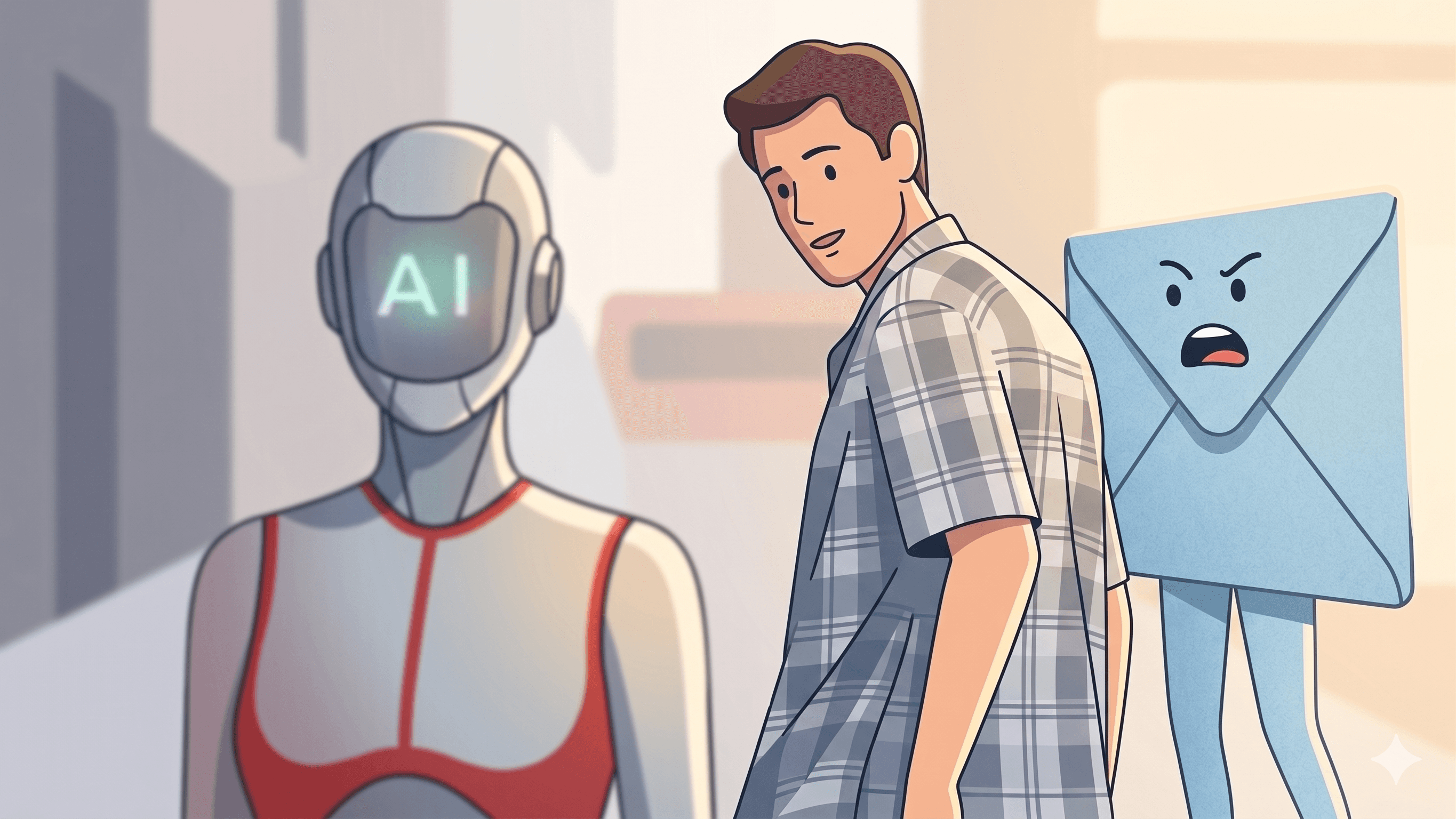
At the same time, something equally significant is happening on the other side: more and more emails are being generated automatically. Campaigns, follow-ups, reminders, replies. And now, on top of all that, written by AI agents that adjust the tone, the content, and even the send timing.
So something curious starts to emerge: AI agents writing to other AI agents.
And caught in the middle: the human. But not reading everything. Not participating in every exchange. Just seeing a summary of what matters.
From letters to system inputs
For years we optimized how we wrote emails: the subject line, the clarity, the call to action, the right level of formality. Today, in many cases, that effort isn't being read directly by a person at all — it's processed first by a machine that decides whether it's worth a human's time.
It's as if we went from writing letters to writing "inputs" for systems.
And that opens up some genuinely interesting questions:
- Does it still make sense to write long, carefully crafted emails if no one will likely read them in full?
- Should we start thinking about how to write in ways that systems can better understand — not just people?
- Where does human communication fit in the middle of all this?
Communication fragments, accelerates, gets filtered
As email loses ground, other channels take its place: direct messaging, collaborative tools, shorter but more frequent meetings, even interactions mediated by assistants.
Communication becomes more fragmented, faster, more assisted. And more filtered.
In a very short time, we went from manually reviewing every email to trusting that someone — or something — would tell us what's important. We're not just delegating management anymore. We're delegating part of the judgment.
The most important shift
It's not just that email is dying or fading into the background. It's that we're changing how we decide what deserves our attention. And when that changes, everything else changes with it.
Maybe in a few years we won't talk about "managing emails" — we'll talk about "managing summaries." Not writing messages, but defining intentions that other systems will translate into communication.
It sounds far off, but it's already started.
Because beyond the technology, at the end of the day this is really about something quite simple: how we understand each other.