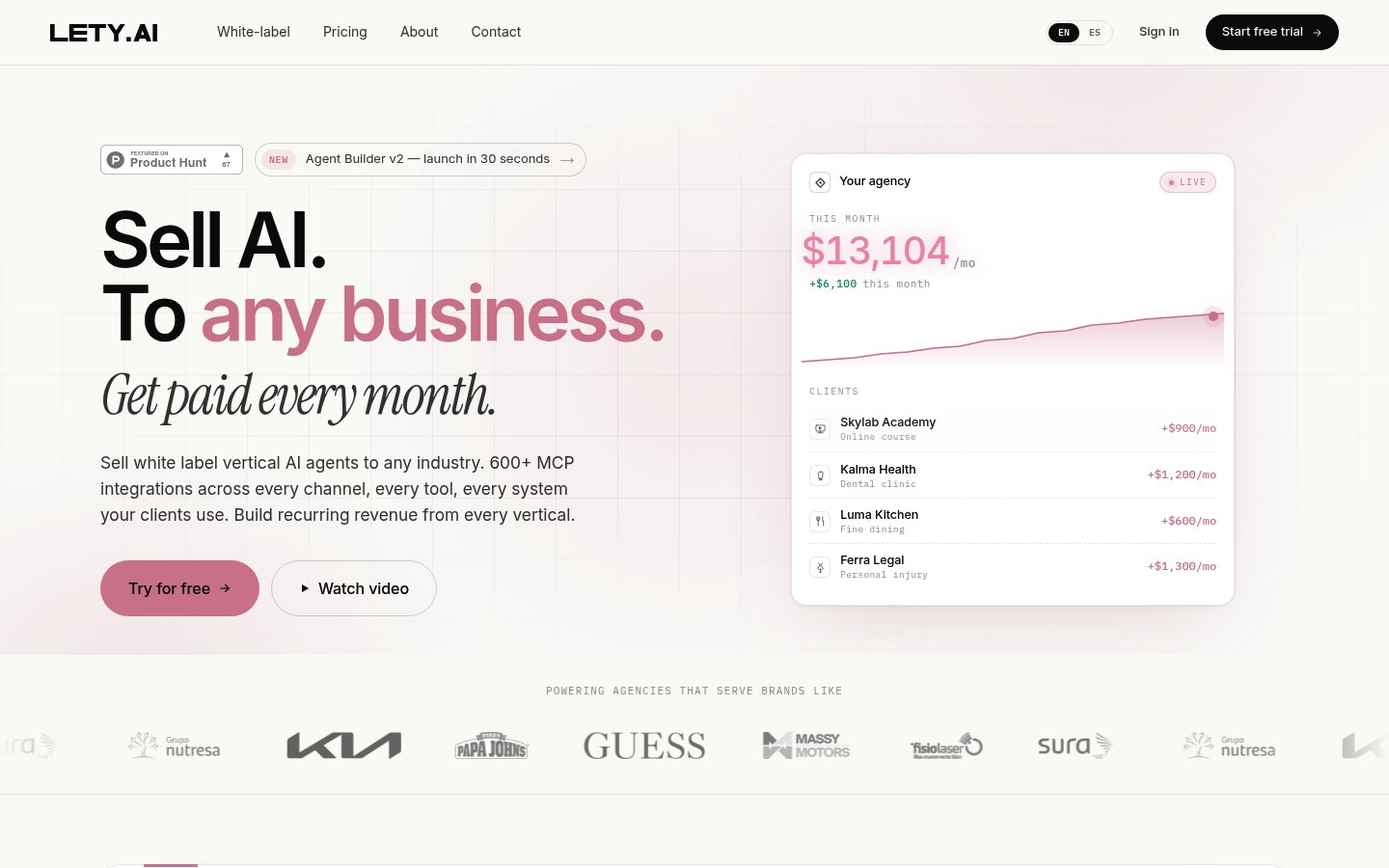


Lety is an AI platform designed to help agencies and entrepreneurs build and sell customized AI agents. With over 600 integrations, Lety allows users to create agents tailored to different business verticals, from healthcare to real estate. The platform offers a white-label approach, meaning users can fully customize the appearance of the agents, using their own domain and logo. This allows agencies to present themselves as tech companies, with Lety remaining invisible to their clients.
Lety's functionality is divided into four main layers: build, brand, bill, and scale. The build layer allows users to select their client's industry and automatically generate an AI agent with pre-configured prompts. This facilitates the rapid and efficient implementation of AI solutions without requiring advanced technical knowledge.
The brand layer enables users to customize the client experience, ensuring that all communication and interface reflect their brand. Regarding billing, Lety automates the collection process, allowing users to set rates and manage their income effectively.
Finally, the scale layer allows agencies to manage multiple clients from a single dashboard, simplifying administration and business growth. With Lety, users can offer AI solutions across various industries, including healthcare, education, finance, and more.
The platform is ideal for those looking to turn artificial intelligence into a SaaS business without coding. With a 14-day free trial, users can explore all functionalities before committing. Lety presents itself as a comprehensive solution for those looking to monetize artificial intelligence effectively and scalably.